Holy Saturday
I read an article today about Holy Saturday. It was described as the day of Holy Week that we skip over most easily (Wednesday being a distant second). The creeds may not seem to help:
“He descended to the dead”—The Apostles’ Creed
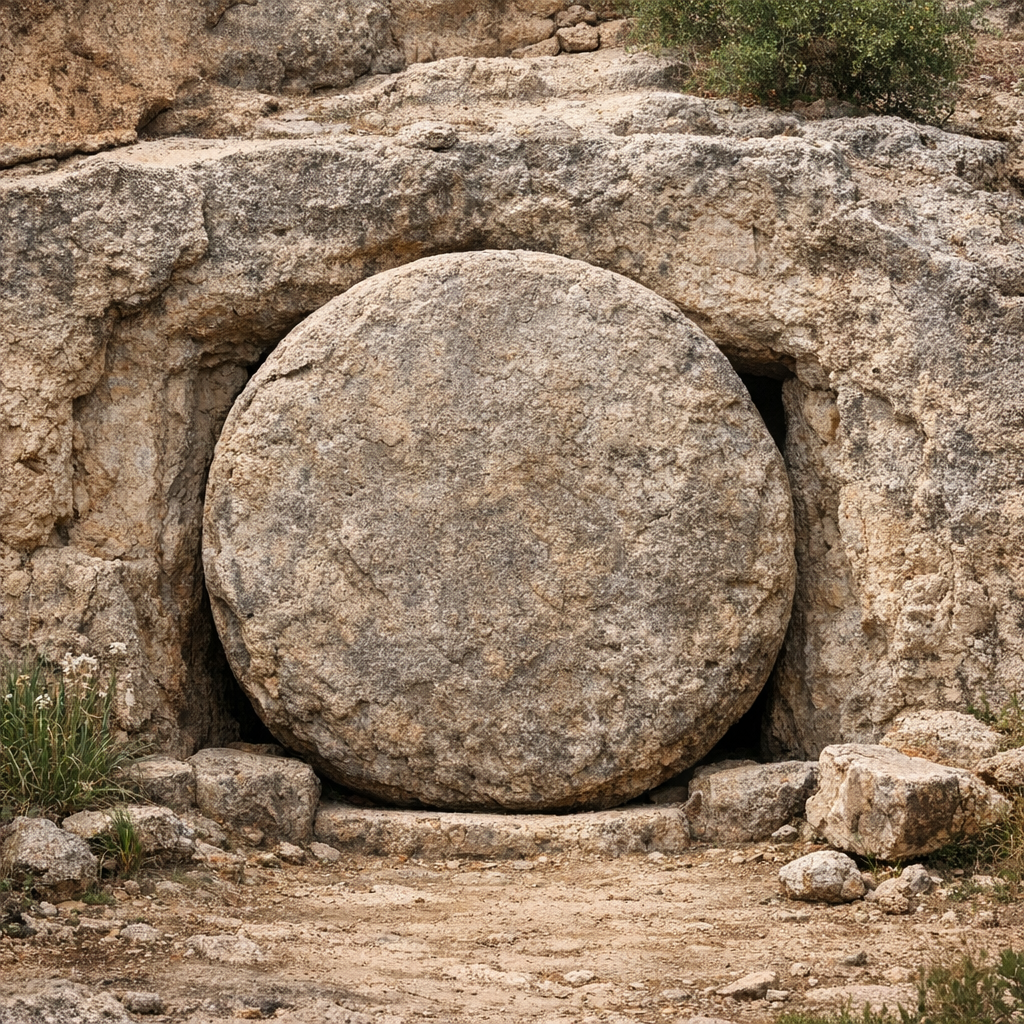
“…crucified…he suffered, and was buried”—The Nicene Creed
Neither says much about the day, or Jesus, on Saturday.
We know his disciples rested in accordance with the Sabbath regulation (Luke 23:54-56). It certainly was not a peaceful rest, and those who had been working to prepare his body for the grave no doubt were dealing with a sense of incompleteness in their duty.
But Jesus was dead. And on that day, he stayed dead.
Yes, his spirit had left the body and gone to the place where the righteous dead would be waiting (a place Jesus labeled “Paradise” in the hours before his death). That’s what happens to believers, too.
But for those left behind, what remained of the One they believed was the Son of God was a corpse. A lifeless body that had to be wrapped and left in a grave. Anyone who might have looked at the body from 3 pm Friday onward would have seen what all of us who have seen a corpse have seen.
Why did Jesus stay dead? Why didn’t he die, and then come back the next day, or hours later? Here are two suggested reasons.
He had work to do.
1 Peter 3:19-20 tells us, “he went and proclaimed to the spirits now in prison.” It doesn’t say what he proclaimed, but it tells us that those hearing this message had been disobedient in the days of Noah. In 1 Peter 4:6 says “the gospel was preached even to those who are dead, that though judged in the flesh the way people are (that is, they died physically), they might live in the spirit the way God does.” Matthew Emerson’s book, He Descended to the Dead: An Evangelical Theology of Holy Saturday, gives the fullest (and in my view, the best) explanation of what these and other verses are telling us. Jesus went to Sheol, the Bible’s common term for the place of the dead—both righteous and unrighteous. That place had three separate sections for three different categories of spirits. There were the righteous dead who were in “Paradise”—also called Abraham’s bosom in the story of the Rich Man and Lazarus in Luke 16. Paradise is where Jesus told the thief on the cross he would be with him that day (Luke 23:43). There were the unrighteous dead found in Hades, similar to Hell but not the same—a place of torment (seen in that same story in Luke) where they await final judgment. In the story in Luke 16, we are told that the righteous and unrighteous are separated by a “great chasm,” but just as Abraham could be seen and heard by the rich man, it isn’t too hard to believe that Jesus and his message could be seen and heard among the lost. And then there is “The Abyss” or Tartarus—the place where fallen angels are somehow kept in chains (2 Peter 2:4, Jude 6). Jesus’ message could be made clear there as well—he is still God, after all. Jesus proclaimed his victory on the cross to the righteous who had believed and now had assurance of their future life. He also proclaimed the certainty of judgment to the unrighteous, and the ultimate defeat of the fallen angels who had worked so hard against God’s redemptive plan—especially in the days of Noah (remember the “sons of God” and “daughters of men” and the Nephilim and all the corruption before the Flood?).
So Jesus was telling all those who had lived before the Cross that He had secured His victory and the power of the Gospel.
He had something to teach us.
In the meantime, he stayed dead. He had made all sorts of promises about eternal life, forgiveness, the Kingdom—in short, the hope in Christ that faith in Christ is anchored to. What could he possibly be trying to teach us?
There may be more, and I'm sure others can come up with lessons to be learned. But as I think about what the disciples were going through, I think that this much is true. He was preparing his followers, then and now, for moments when clearly stated promises are not being fulfilled and there is no earthly hope of fulfillment. I think we see this manifested on the road to Emmaus, where two disciples share their distress that Jesus has been dead for three days (that's very dead), and their unbelief in the fantastic reports of the women that they'd had a message from angels, had discovered that Jesus was alive, and other disciples had found the grave empty. They struggled to believe Jesus' words because they knew (and perhaps had seen) that he was dead.
We have faced (or we will) moments where faith seemed impossible in light of present realities. Whether it’s Jesus' power to deliver us from sin and temptation, or the defeat of earthly powers working to destroy his people, or the fulfillment of prophetic promises.
In those moments where we are staring at something dead, Jesus wants us to recall what he said and to believe his Word (that was the message to the Emmaus travelers).
So on this Holy Saturday, think about those circumstances or relationships where you see no hope ahead and no possible good that could come. Bring them to Jesus, the one who reminds us he is the One “who died, and behold, I am alive forevermore...” (Revelation 1:18). We may not know how or when, but Jesus can and will work to fulfill God’s mission, God’s plan, and God’s good purposes in every single one of those situations in ways that will cause us to marvel in his glory and ultimate goodness. It may, as resurrection does, go beyond our capability to understand. It may involve, as his proclamation to the dead did, events that go beyond our capacity to perceive. But the dead body of Holy Saturday, we resurrected as the ever-living Messiah and King who will never die again. Let this day remind us of our hope in the face of hopeless times.